
🚨 “TRULY ARROGANT AND DISRESPECTFUL TO HIS OPPONENTS!” – Roger De Vlaeminck roared in outrage after witnessing Mathieu van der Poel’s Cristiano Ronaldo-style celebration at the finish line after winning his record eighth cyclo-cross world title.
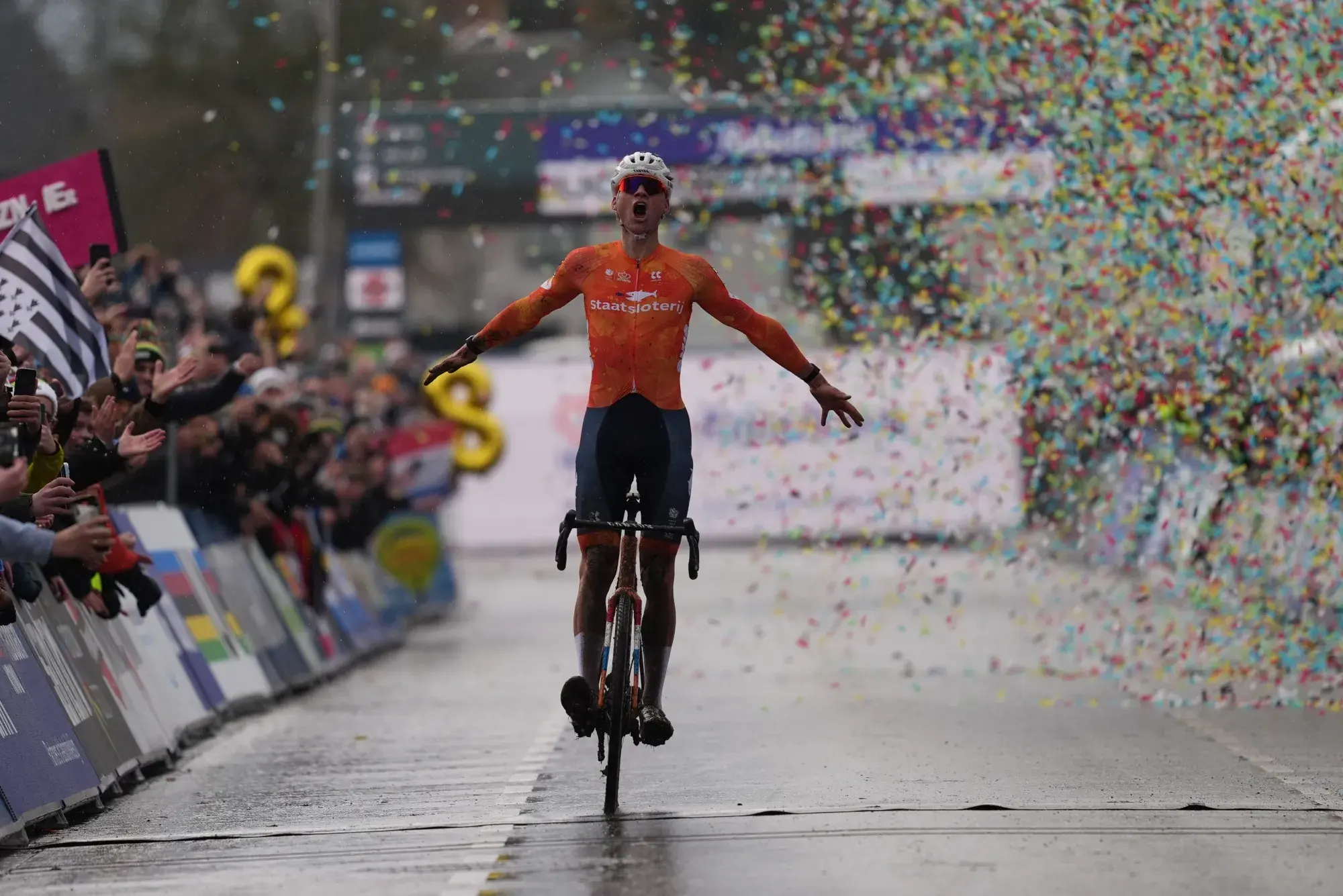
The cyclo-cross world was still absorbing Mathieu van der Poel’s historic eighth world title when controversy suddenly exploded, shifting attention away from sporting brilliance toward behavior, symbolism, and respect within cycling’s deeply rooted traditions.
At the finish line, Van der Poel did not simply cross, smile, or salute the crowd. Instead, he lifted his bike above his head and shouted triumphantly, a gesture many immediately compared to Cristiano Ronaldo’s theatrical celebrations.
For some fans, the moment felt electric, modern, and fitting for a dominant champion. For others, it crossed an invisible line, transforming victory into provocation and self-glorification rather than quiet mastery of the sport.
No voice was louder in condemnation than Roger De Vlaeminck. The four-time Paris–Roubaix winner did not hide his anger, describing the celebration as arrogant, disrespectful, and deeply incompatible with cycling’s historical values.
De Vlaeminck has long represented an era where victories were acknowledged with restraint. A nod, a raised hand, or silent acknowledgment of rivals was considered the ultimate expression of class and authority.
Seeing Van der Poel’s display, De Vlaeminck reportedly “lost his patience,” insisting that greatness in cycling has never required shouting, posing, or theatrical gestures borrowed from other sports cultures.
In his view, lifting the bike was not a symbol of pride but dominance, a message suggesting superiority rather than shared respect for beaten competitors who suffered on the same brutal course.

In his view, lifting the bike was not a symbol of pride but dominance, a message suggesting superiority rather than shared respect for beaten competitors who suffered on the same brutal course.
Supporters of De Vlaeminck argue that cyclo-cross, perhaps more than road cycling, is built on humility. Mud, cold, and suffering strip riders of ego, leaving only endurance and grit.
They claim celebrations should reflect that reality, not resemble stadium entertainment designed for global television rather than the soul of the discipline itself.
However, Van der Poel’s defenders see the situation very differently. They argue that winning eight world titles is unprecedented and emotionally overwhelming, justifying a spontaneous and expressive reaction.
They point out that cycling is evolving, attracting younger audiences who connect with personality, emotion, and visible passion more than rigid traditions.
To them, Van der Poel’s celebration was not an insult but an authentic release after years of pressure, expectations, and relentless scrutiny placed on a generational talent.
Yet the criticism goes beyond one gesture. De Vlaeminck and others see it as part of a broader shift, where modern stars place branding and spectacle alongside sporting achievement.
They fear cycling is slowly drifting toward individual showmanship, where rivals become background characters rather than respected peers in a shared struggle.
The phrase “dark truth behind the throne” has begun circulating, suggesting that dominance can sometimes breed detachment from the values that once shaped champions.
Van der Poel’s overwhelming superiority in recent seasons has left competitors battling for second place, intensifying perceptions that his celebration emphasized imbalance rather than competition.
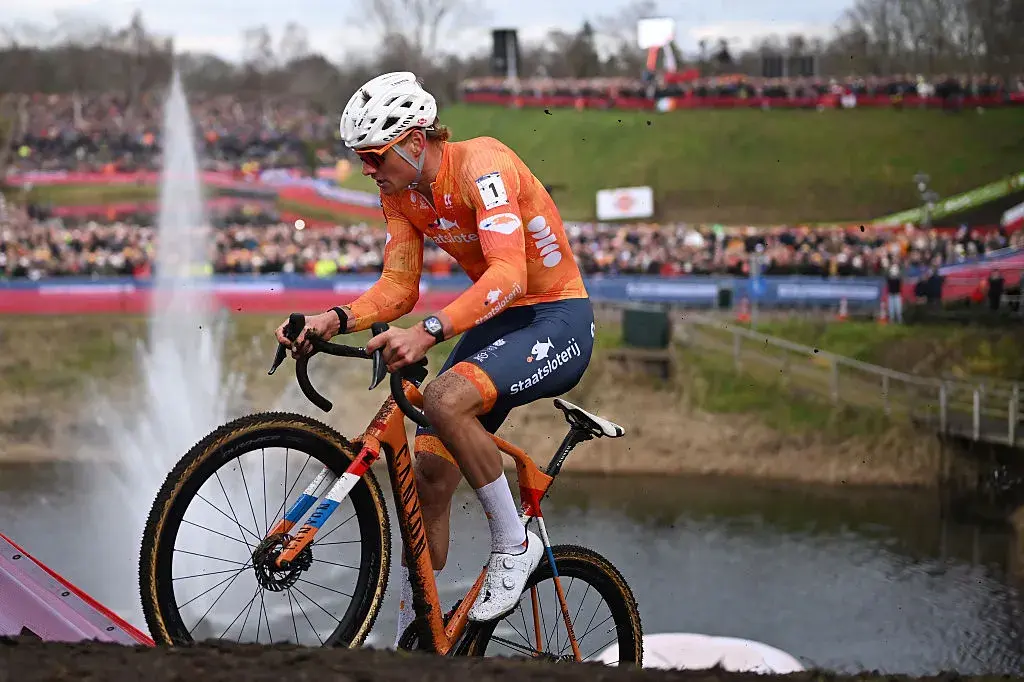
Van der Poel’s overwhelming superiority in recent seasons has left competitors battling for second place, intensifying perceptions that his celebration emphasized imbalance rather than competition.
Some riders privately admitted the moment felt uncomfortable, as if the finish line had become a stage rather than a conclusion to collective suffering.
Others disagreed, stating that emotions at world championships are raw and unpredictable, and policing celebrations risks draining humanity from elite sport.
Historically, cycling has wrestled with similar debates. From Merckx’s relentless hunger to modern-era rivalries, dominance has always sparked tension between admiration and resentment.
What makes this case different is visibility. Social media amplified the celebration instantly, turning a few seconds into a global argument within minutes.
De Vlaeminck’s words, sharp and uncompromising, reignited generational conflict between cycling’s past and its rapidly changing present.
He insists that respect is shown not in how loudly one celebrates, but in how quietly one acknowledges those defeated.
Van der Poel, for now, has remained largely silent, allowing performances to speak while the debate rages around him.
Whether apology, explanation, or defiance follows remains unknown, but the incident has already left a mark beyond the results sheet.
What is clear is that this was never just about a bike raised overhead. It was about identity, legacy, and what cycling chooses to celebrate.
As the dust settles, the sport faces an uncomfortable question: should tradition restrain expression, or should greatness redefine the rules it once followed?
The answer may shape not only Van der Poel’s legacy, but the emotional language of cycling’s future champions. The answer may shape not only Van der Poel’s legacy, but the emotional language of cycling’s future champions.